


Handloom vs Powerloom: How to Spot the Difference?
In Indian textiles, the difference between handloom and powerloom is not always visible at first glance. Both may shimmer with zari, both may carry familiar motifs, and both may look festive on the hanger. But look closer, feel the fabric, and the truth reveals itself slowly.
At DOHR, fabric is never just a base. It is a philosophy. Understanding handloom vs powerloom is essential to understanding why certain garments feel lighter, last longer, and carry a presence that cannot be replicated by machines. This distinction becomes especially important in festive wear, where craftsmanship and intention matter as much as appearance.
The Difference Between Handloom and Powerloom
The core difference between handloom and powerloom lies in how the fabric is made.
Handloom textiles are woven entirely by hand, without electricity. The weaver controls every movement of the loom, adjusting tension, rhythm, and alignment manually. This slow, deliberate handloom weaving process allows for nuance, flexibility, and individuality in the fabric.
Powerloom fabric, by contrast, is produced using electrically operated machines. The process is faster and designed for volume. Patterns are repeated with precision, and output is consistent. While efficient, powerloom weaving removes the human intuition that defines handloom textiles. This distinction is at the heart of handloom textiles India has preserved for centuries.
Why Handloom Fabrics Are Expensive?
A common question is why handlooms cost more. The answer is time and labour.
Handloom weaving is not linear. Preparing yarn, dyeing, setting the loom, weaving, and finishing can take weeks. Each step is done with care, often by different artisans. The cost reflects fair wages, skill, and time.
Powerloom fabric is produced in hours, sometimes minutes. Automation reduces labour but also reduces depth. This is why handloom fabrics are expensive and inseparable from why they are valuable. At DOHR, investing in handloom is a conscious choice to honour craftsmanship over speed.
Benefits of Handloom Over Powerloom
The benefits of handloom over powerloom go beyond aesthetics. Handloom fabrics are breathable, adaptable to climate, and softer on the skin over time. They age gracefully, becoming more comfortable with wear. Each piece carries subtle irregularities, a signature of human touch rather than defect.
From an environmental perspective, handloom vs powerloom sustainability is a crucial conversation. Handloom weaving consumes minimal energy, produces less waste, and supports decentralised artisan communities. Powerloom production, while efficient, relies heavily on electricity and industrial processes. Choosing handloom is choosing longevity, sustainability, and cultural preservation.
How to Identify Handloom Fabric?
Knowing how to identify handloom fabric empowers conscious buying.
Look for slight variations in weave or motif. Handloom fabrics are rarely perfectly uniform. Check the reverse side of the textile. In handloom pieces, the design often mirrors itself more organically, unlike powerloom fabrics where the back may appear flatter or more mechanical.
Feel the fabric. Handloom textiles have a lived-in softness rather than a factory finish. Most importantly, trust brands that work directly with artisans and disclose sourcing transparently.
Handloom in Practice: DOHR’s Chanderi Ensembles
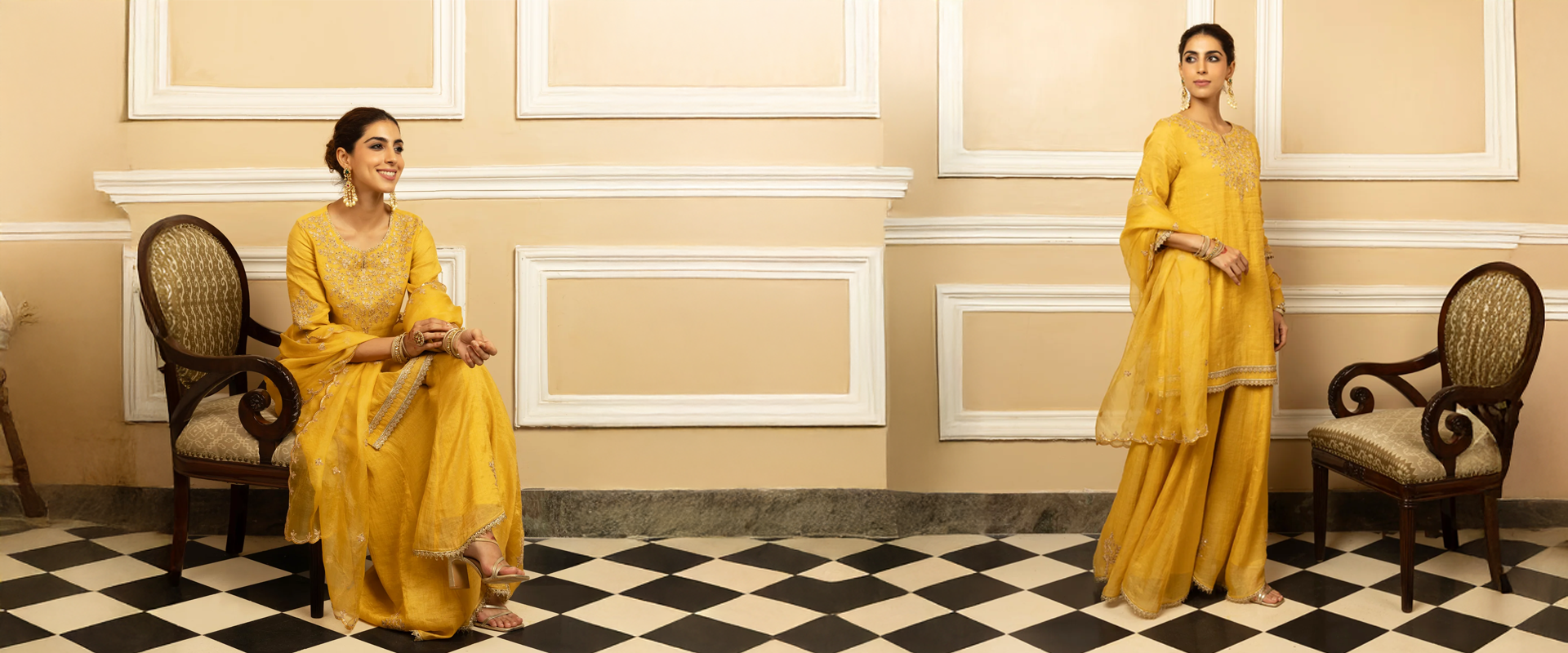
DOHR’s Chanderi pieces are rooted in handloom tradition, making them a natural expression of this philosophy. The Noor Yellow Tissue Chanderi Sharara Set showcases the elegance of handwoven fabric beautifully. The kurta features intricate embroidery with zari, sequins, and gota, while the tissue chanderi sharara offers a light, fluid drape. The fabric catches light gently, a quality unique to handloom Chanderi. Paired with a matching embroidered dupatta, the ensemble balances celebration with comfort.
Similarly, the Noor Pink Tissue Chanderi Sharara Set reflects the versatility of handloom. The soft pink hue, combined with detailed embroidery and the natural sheen of tissue chanderi, creates a look that feels festive yet effortless. These ensembles demonstrate why Chanderi Co-ord Sets and shararas crafted in handloom stand apart in movement and finish.
The Chosen One
Understanding handloom vs powerloom fabric is not about rejecting technology. It is about recognising value. Handloom textiles carry stories, livelihoods, and sustainable practices within their weave. At DOHR, every handloom piece is a commitment to craft, community, and conscious luxury. When you choose a handloom, you choose fabric that breathes, endures, and speaks quietly of the hands that made it.