


For the Fire, the Family, the First Time: Lohri Dressing Stories
Lohri is not just a festival. It is a feeling. Of warmth against winter cold, of family gathered around a fire, of prayers whispered into flames and songs carried by the night air. For a woman celebrating her first Lohri, the occasion holds deeper meaning. It marks beginnings. A new home, a new family, a new rhythm of traditions that slowly become your own.
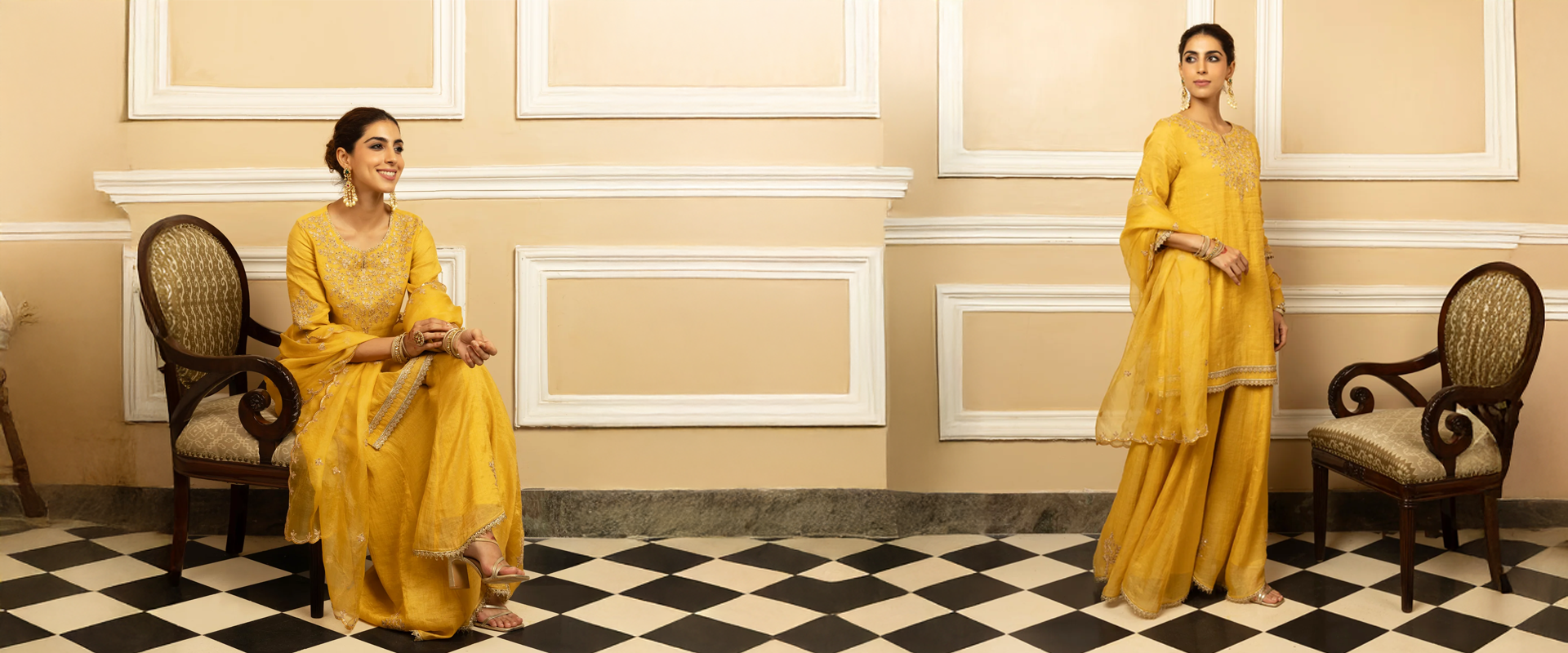
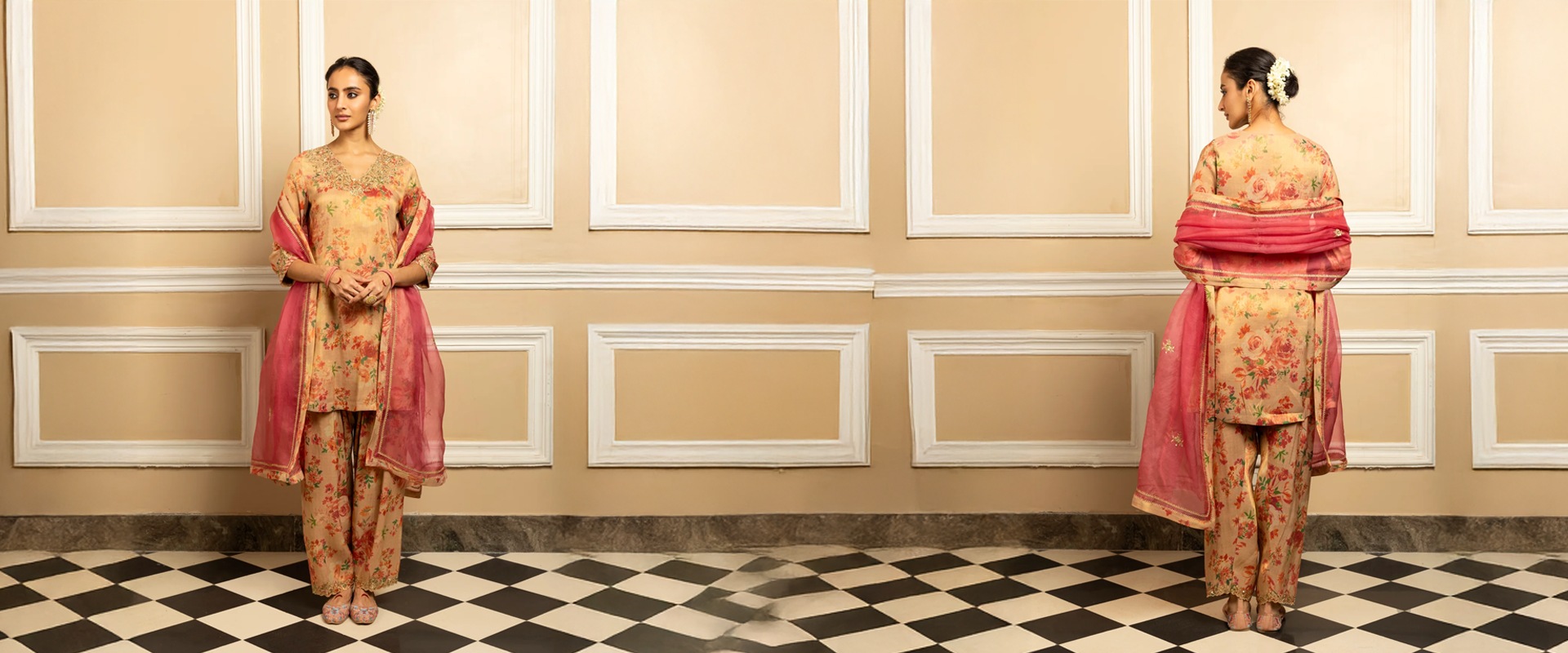
Choosing what to wear for Lohri is not about dressing up alone. It is about honouring ritual while feeling like yourself. A Lohri festival outfit should carry comfort, cultural rootedness, and quiet celebration. At DOHR, festive wear is crafted with this intention, blending heritage techniques with silhouettes that feel personal and lived in.
Here are thoughtful Lohri outfit ideas for women that embrace tradition while allowing space for warmth, movement, and emotion.
Understanding the Traditional Punjabi Lohri Outfit
A traditional Punjabi Lohri outfit is defined by layers, richness, and practicality. Silk chanderi, tissue, and organza are often paired with warm shawls, phulkaris, or dupattas. Embroidery is intricate yet meaningful, reflecting prosperity, abundance, and blessing.
For a first Lohri, the outfit often leans towards deeper tones and handwork, colours that hold ceremonial significance. It is also common to choose ensembles that allow for layering, making Lohri outfit ideas with shawl both functional and symbolic.
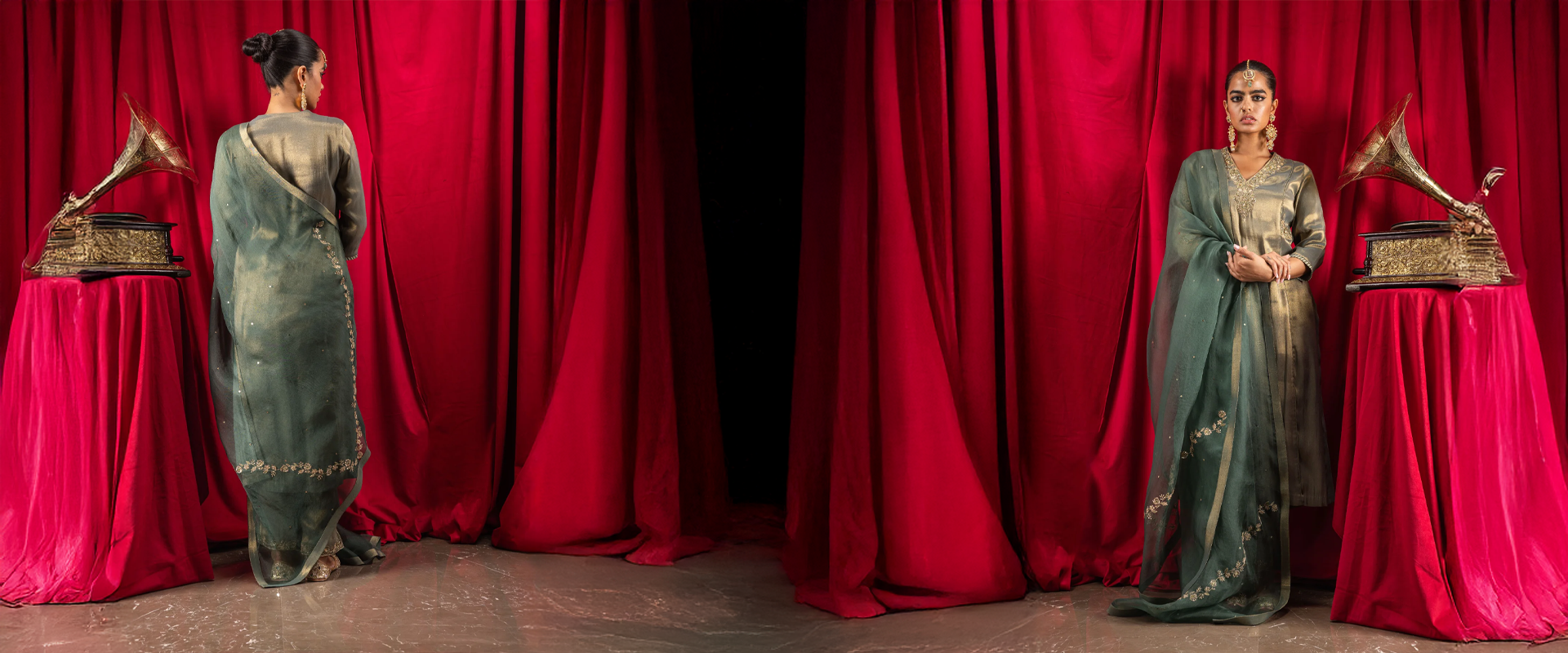
Sumira Dark Green Tissue Kurta Set: A Ceremonial Classic
The Sumira Dark Green Tissue Kurta Set feels made for sacred moments. The deep green tone reflects prosperity and renewal, making it a fitting choice for your first Lohri. Crafted in tissue fabric, the kurta holds a gentle sheen that catches firelight beautifully during evening rituals.
Adda embroidery using dabka, zari, resham, sequins, cut-daana, and gota brings depth without excess. Paired with a pure organza dupatta, this ensemble offers both structure and softness. Styled with a warm shawl draped loosely over the shoulders, it becomes an ideal answer to what to wear for Lohri when tradition and elegance matter equally.
Zahra Plum Silk Chanderi Kurta Set: Grace in Celebration
Plum is a colour that carries quiet confidence. The Zahra Plum Silk Chanderi Kurta Set is designed for women who want to honour tradition while keeping the silhouette contemporary.
The short silk chanderi kurta is embroidered with intricate dabka, zari, sequins, and gota work, adding festive richness. Straight pants keep the look balanced and comfortable, while the matching dupatta completes the ensemble gracefully.
For those seeking refined Lohri outfit ideas, this set works beautifully for daytime gatherings and evening rituals alike. Pair it with heirloom jewellery and a shawl passed down through family to create a look that feels deeply personal.
Sanya Blue Silk Chanderi Straight Kurta Set: Calm and Composed
Blue carries calm into celebration. The Sanya Blue Silk Chanderi Straight Kurta Set offers a serene alternative to deeper festive hues while remaining rooted in tradition. The straight kurta is detailed with cutdana, zari, sequins, and gota embroidery, creating a textured yet understated finish.
Paired with straight fit pants and a graceful dupatta, the ensemble allows ease of movement, making it ideal for rituals, prayers, and time spent with family. Among modern Lohri outfit ideas for women, this set is perfect for those who prefer elegance that speaks softly rather than loudly.
For You and Yours
Your first Lohri is a moment you will remember long after the fire has dimmed. It deserves an outfit that reflects warmth, tradition, and intention. Whether you choose deep greens, rich plums, or calming blues, the essence lies in how the garment makes you feel.
At DOHR, festive wear is created to honour such moments. These ensembles are not just Lohri traditional dress options, but pieces that become part of memory. Because Lohri is not about standing out. It is about belonging.