



What Is Chanderi Silk? A Complete Guide to India's Most Loved Weave
There are fabrics that require explanation, and there are fabrics that explain themselves the moment you hold them. Chanderi is of the latter kind. The weight of Chanderi silk - or more accurately, the near-absence of weight - tells you immediately that this is a different genre.
The slight sheer quality of Chanderi silk sets it apart. The softness of this indigenous silk fabric feels like it was earned rather than manufactured.
Chanderi silk has been one of India's most quietly beloved weaving traditions for centuries. Most women who reach for it eventually build their wardrobes around it. It is even difficult for them to explain when and how they fell in love with Chanderi silk.
This guide exists to answer everything about Chanderi silk - fully and honestly.
Where does Chanderi silk come from?
Chanderi silk originates from Chanderi, a small town in Madhya Pradesh. Set between Gwalior and Bhopal on the edge of the Vindhya hills, Chanderi has an interesting geography and history. The rich history of the land contributed to producing one of India's most distinctive textiles.
The weaving tradition in Chanderi dates back at least to the 11th century, with references to Chanderi fabric appearing in historical texts from the Mughal period.
The fabric that Mughal court records describe as delicate, translucent, woven to a fineness, it is distinguished from every other cotton and silk cloth available.
It is the same tradition still practiced in Chanderi, Madhya Pradesh today.

How did the craft of Chanderi Weaving Develop?
The weavers of Chanderi developed their craft in response to specific conditions: the particular quality of water in the region, the local cotton and silk available to them, and the centuries-long patronage of royalty that rewarded fineness over everything else.
The result was a weaving tradition that occupied a unique position in Indian textiles - lightweight enough to be comfortable in warm weather, refined enough for the most formal occasions, and distinctive enough to be immediately recognisable.
Chanderi fabric received GI tag status in 2005. GI tagging by the Government of India is a legal acknowledgement that authentic Chanderi can only come from this specific geography, made by weavers whose craft knowledge connects directly to this tradition.
How is Chanderi Silk Made?
Mulberry silk yarns are used for weaving Chanderi silk fabric. The beauty is in the process.
Chanderi fabric begins on a pit loom - a traditional handloom where the weaver sits in a recessed pit below the loom structure. He manages the warp threads with their feet while passing the weft shuttle through by hand.
It is an arrangement that has not changed meaningfully in several centuries.
The warp threads, typically mulberry silk, are stretched across the loom first. The weft threads are then passed through in careful sequence, interlocking with the warp to build the fabric row by row.
Where zari motifs appear - the characteristic coin shapes, floral forms, and geometric borders of traditional Chanderi - the weaver manually lifts specific warp threads and introduces supplementary metallic weft at precisely the right points.
Each motif placed this way is a deliberate decision, made by hand, requiring the kind of precision that only years of practice produce.
Is Chanderi Silk Real Silk?
This is one of the most commonly asked questions about Chanderi, and the answer requires a small clarification.
Chanderi is not made from pure silk alone - it is typically woven from a combination of silk and cotton, or silk and zari (gold or silver metallic thread).
The base warp threads are usually silk, while the weft threads may be cotton or silk depending on the grade and the specific weave. The zari motifs - the woven-in designs that are the most recognisable feature of traditional Chanderi - are worked in metallic thread on this silk-cotton or pure silk base.
There is also pure silk Chanderi, where both the warp and weft are silk. It is the finest and most expensive grade.
And there is Chanderi cotton, where both are cotton, which is the most accessible grade and the most comfortable for daily wear.
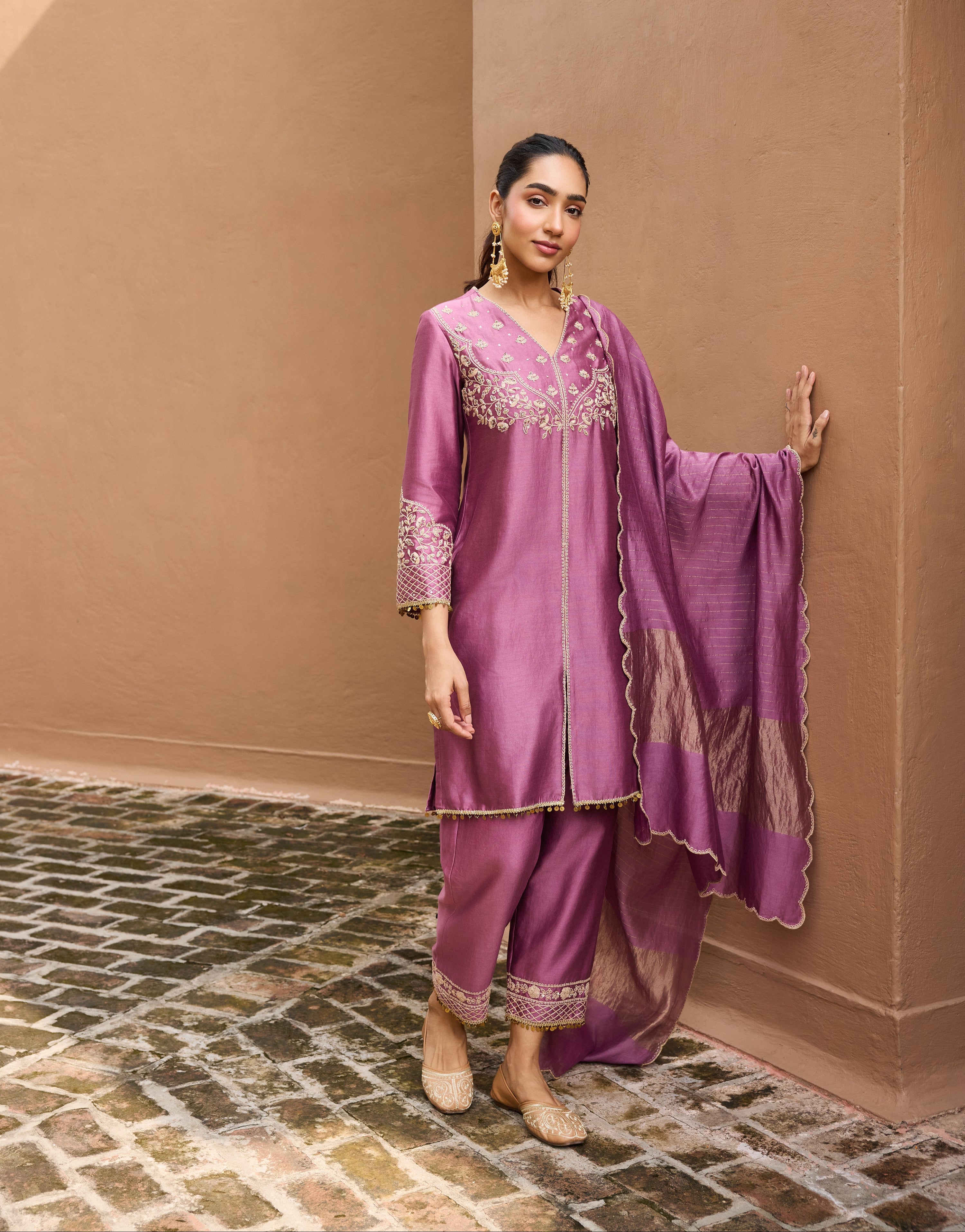
The Chanderi fabric used at Dohr is Silk Chanderi - the silk-dominant weave that carries the characteristic luminosity the fabric is known for, in a weight and drape that works across both occasion dressing and daily wear.
Why Is Chanderi Silk Expensive?
The answer is in the process, and the process is not simple.
Chanderi is handwoven on traditional pit looms - the weaver sits in a pit below the loom, managing the warp threads with their feet and the weft threads by hand. One weaver, working full time, produces between one and two metres of fine Chanderi fabric per day.
A six-metre saree takes three to five days minimum. A heavily motifed piece with complex zari work takes considerably longer.
Each motif requires the weaver to manually lift and separate specific warp threads before passing the metallic weft. The precision required for this is developed over years of practice. It cannot be approximated on a power loom without losing the definition that makes Chanderi motifs worth having.
The combination of hand weaving time, skilled artisan labour, genuine silk and metallic thread, and the GI-protected provenance of the tradition is what makes authentic Chanderi silk expensive. It reflects what the fabric actually costs to make - which is the most honest reason any fabric should be expensive.
Motifs used in Chanderi Silk Fabric
Chanderi is not just popular for its lightness, weightlessness, and airiness; it is also known for its metallic motifs.
Some of the celebrated signature motifs of Chanderi are
- Ashrafi buti - the woven-in coin shapes
- Keri - the mango paisley
- Phool-patta - the stylized floral motifs
- Mor - the peacock design representing royalty
- Jangla - the intricate floral leafy arrangements
- Chatai - the mat-like woven pattern
- Nalferma - the geometric grid pattern
- Dandidar - the linear striped patterns
How to Identify Real Chanderi Silk
Everything fine comes with imitations flooding the market. Chanderi silk is widely imitated too. Machine-woven fabrics that approximate its sheer quality and weight are available at a fraction of the price and bear very little resemblance to the genuine article beyond a superficial glance.
The most reliable way to identify genuine Chanderi silk is through a combination of feel, light, and observation.
Here are a few ways to identify real Chanderi silk.
-
Hold it up to light.
Authentic Chanderi has a characteristic translucency - a sheer quality that comes from the weave structure rather than from thin or poor-quality thread. It is not opaque like heavy silk, but it is also not flimsy like synthetic alternatives. The translucency has depth to it.
-
Feel the texture.
Genuine Chanderi has a very slight texture from the weave. It is not perfectly smooth like synthetic fabric or processed silk. It is soft but has subtle grains that come from natural fibre.
-
Look at the zari motifs.
On authentic handwoven Chanderi, the motifs are clean and precisely placed, but you will see the slight variation that comes from a hand-controlled shuttle. Machine-woven imitations have perfectly uniform, mechanical edges.
For Which Seasons Is Chanderi Appropriate?
This is where Chanderi's most remarkable quality becomes apparent. It is, genuinely, a fabric for most of the year in most of India's climate conditions.
In summer, Chanderi's lightweightness mixed with cotton makes it one of the most breathable fabrics available for festive and occasion dressing. It does not trap heat the way heavier silks do. It moves freely. The slight sheer quality actually helps in humid conditions.
In winter, Chanderi is light enough to layer! A Chanderi kurta under a structured jacket or a Chanderi suit with a warm dupatta works well in the mild winter temperatures that most Indian cities experience.
For monsoon occasions, Chanderi's behaviour with humidity is better than most natural fabrics. It does not cling, does not lose its shape, and dries reasonably quickly.
The practical conclusion: Chanderi works for approximately nine to ten months of the Indian year for most women in most cities. It is not a seasonal fabric. It is a wardrobe foundation.
How to Care for Chanderi Silk Outfits
Dry cleaning is the safest option for heavily embroidered Chanderi silk outfits. The metallic thread in the zari can tarnish with water exposure, and the silk warp threads can be weakened by harsh detergents.
For plainer Chanderi pieces without heavy embellishment, hand washing in cold water with a very mild soap works well. Wash separately in case the dye releases slightly in the first wash. Never wring or twist - press the water out gently, then lay flat in shade to dry.
Iron on low heat with a thin cotton cloth between the iron and the fabric. Never iron Chanderi directly. The silk warp threads are delicate under direct heat.
Store in soft cotton muslin rather than plastic bags. Fold along natural creases and refold every few months to prevent permanent fold marks. Keep away from direct sunlight and moisture.
Bottomline
Chanderi silk is loved for it consistently delivers something rare in fashion - a fabric that looks more expensive than it feels, and feels better than it looks like it should.
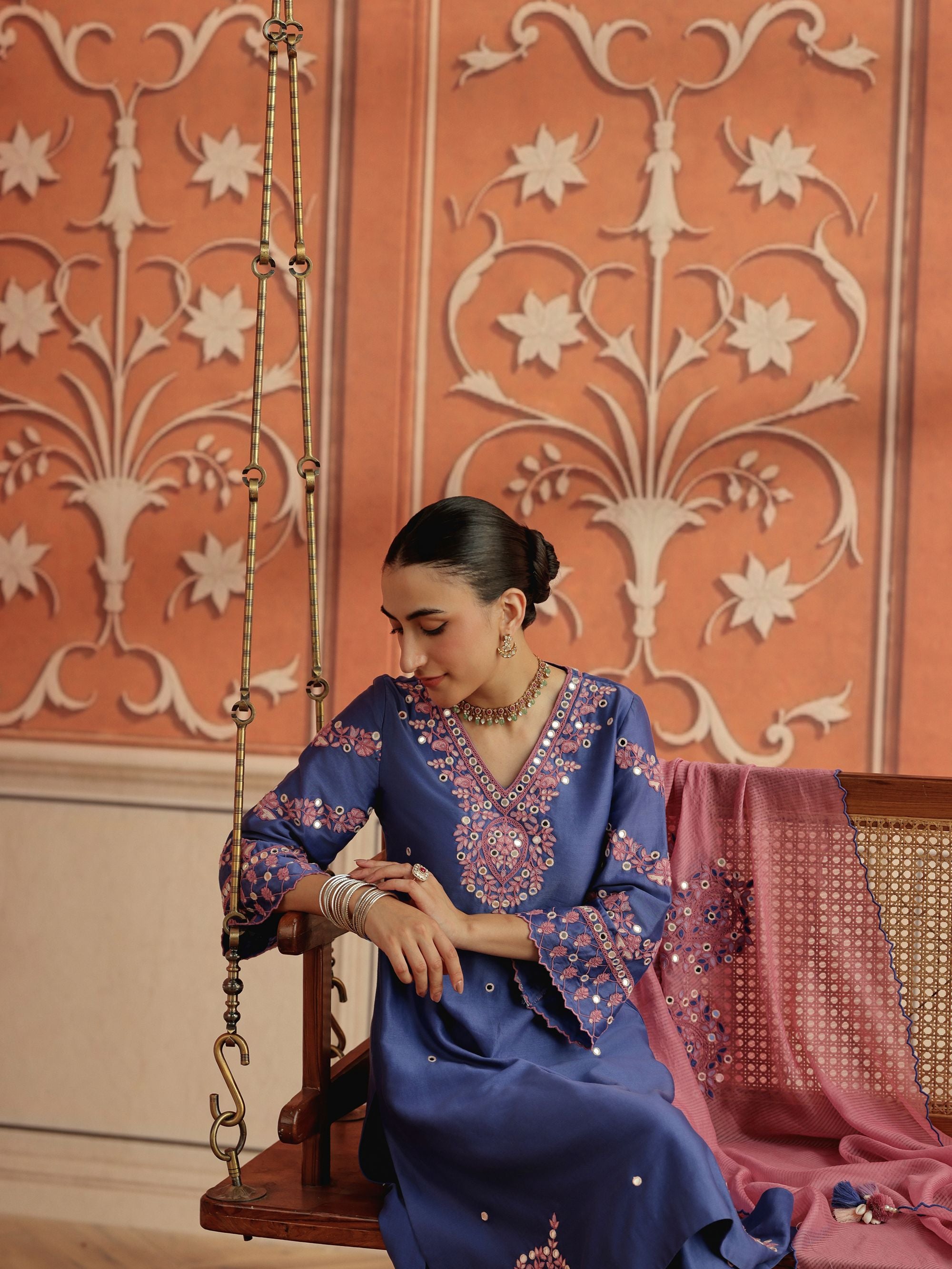
Chanderi silk outfits photograph with a luminosity that heavier silks struggle to achieve. It drapes in a way that flatters most body types. It holds embroidery - Aari work, mirror embroidery, dori, tilla, and patra - without being overwhelmed by it. It feels festive but not formal, refined but not rigid.
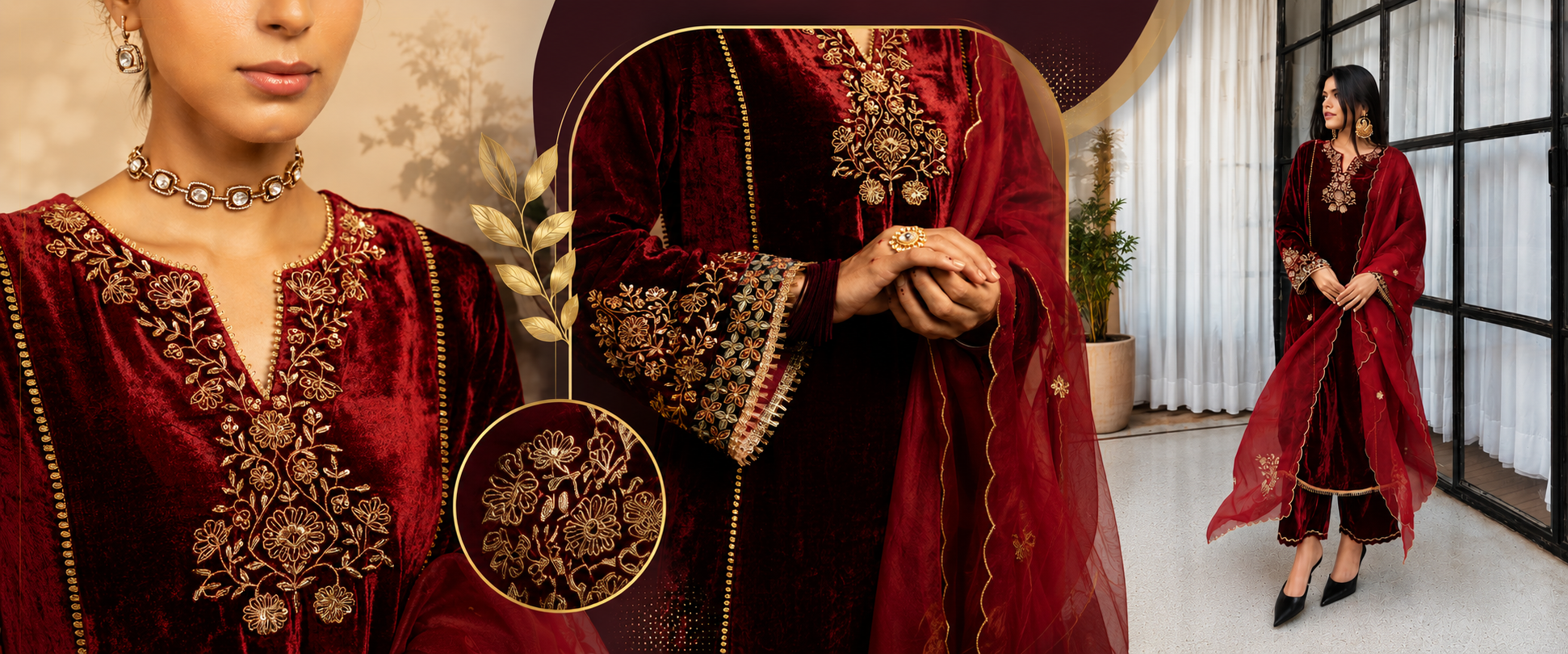
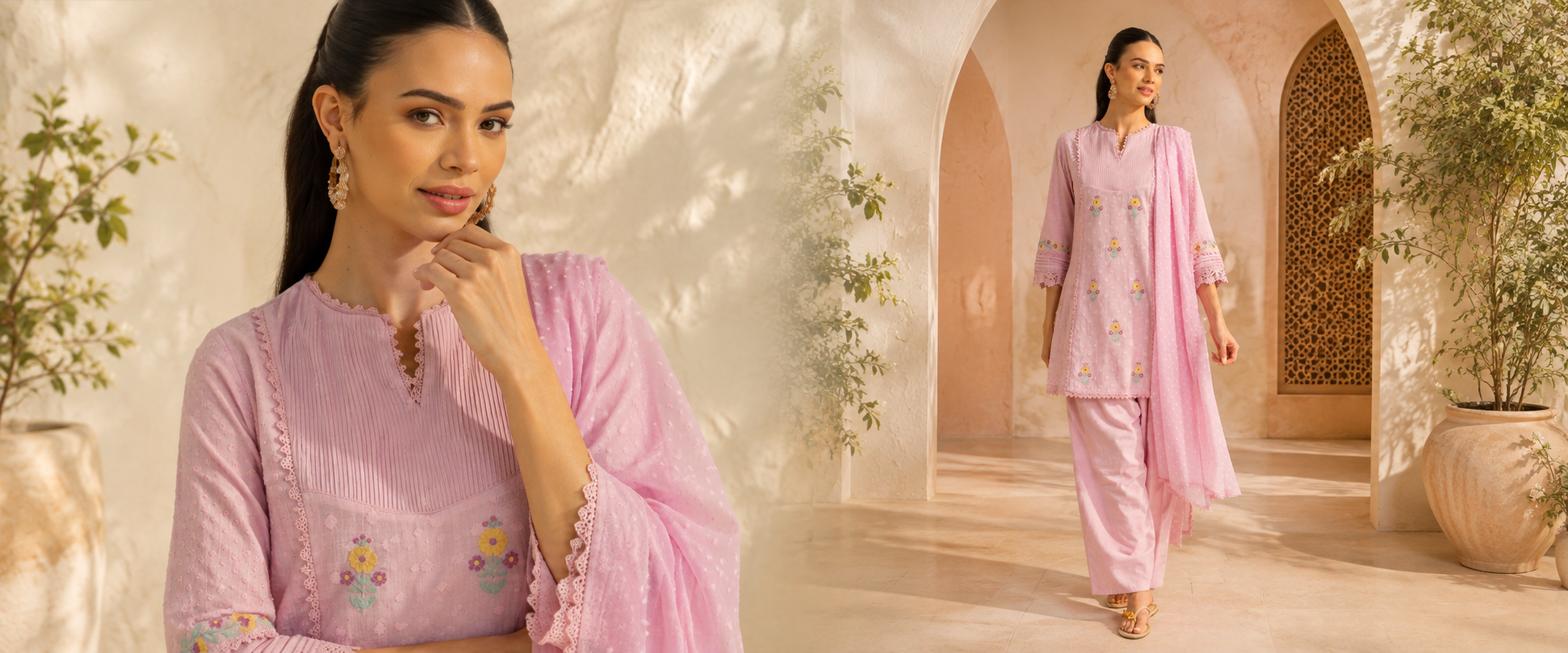
At Dohr, Silk Chanderi is the fabric that runs through the collections precisely because it satisfies all of these demands simultaneously. The Nira Mirror Work Silk Chanderi Kurta Set, the Samara Cotton-Silk Chanderi Choga Set, the Kainat Silk Chanderi Embroidered Choga Set - each piece uses the fabric for what it does best - carry craft, hold color, and make you look like you chose with genuine care.